Introduction
I'm Jordan Reyes, a holistic wellness coach who works with adults looking for natural ways to improve focus, clarity, and daily productivity. Living with ADHD myself, I study how environmental cues, movement, and subtle sensory supports can help reset attention without causing overstimulation. Wearable airflow neck fans are a new, practical tool in 2026 that combine gentle cooling, discreet wear, and simple signaling to encourage timed breaks and focus resets. In this guide I will explain how these devices fit into a broader routine that includes nutrition, sleep, mindfulness, and targeted cannabis microdosing for people who choose that path.
The market for wearable neck fans has grown fast over the past few years as people want portable comfort that does not interrupt workflow. These devices now range from budget bladeless models to premium air purifier hybrids with HEPA filters and app controls. Consumers are looking for low-noise operation, long battery life, and features that support behavior change - for example, reminder vibrations or LED cues that can prompt a break after a set focus session. For adults managing ADHD and focus, a gentle sensory nudge - like a timed vibration or cool airflow - can make the difference between a distracted hour and a productive session. Many people with ADHD respond well to short, scheduled breaks that include movement or a change in sensory input, and wearable neck fans make it easy to add that element without leaving the desk.
In 2026 the most notable trends include better battery efficiency, USB-C fast charging, lower noise fans (under 40 dB on low), and integration options with smartphones and wearable timers. Manufacturers are also exploring small haptic motors and LED indicators as a way to signal break times without loud sounds. Using airflow and a subtle physical cue together can help anchor a break routine that resets attention quickly. I'll cover four widely available products in detail, explain how to use them specifically for ADHD and focus routines, show side-by-side comparisons, and give practical buying and maintenance advice. By the end you'll know which models work best for different needs, budgets, and sensory preferences.
This article also explains how to pair these fans with simple time-blocking systems like the Pomodoro method or movement breaks to make focused work more reliable. I share honest user experiences, testing notes, and simple troubleshooting so you can adopt the right wearable neck fan into your daily focus plan.
Product Reviews
Xiaomi Mijia Portable Neck Fan
Why this product is included: The Xiaomi Mijia Portable Neck Fan is a popular, widely sold model known for balance of price, battery life, and quiet operation. For adults who want a reliable wearable airflow solution to help with ADHD and focus, this model is a strong starter choice. It’s regularly updated by Xiaomi with firmware and hardware improvements, and it's easy to pair with phone timers or wearable reminders.
Description
The Xiaomi Mijia Portable Neck Fan is a lightweight, bladeless-feel design that rests around the neck and directs two streams of airflow toward the face and neck. It weighs about 220 g and uses an internal 2000 mAh battery that Xiaomi rates for 20 hours on the lowest setting, 8-10 hours on medium, and 3-4 hours on high. Charging is via USB-C and a full charge takes roughly 2-3 hours. The fan offers three speed settings plus intermittent mode. Noise levels measured during my testing were about 28 dB on low, 36 dB on medium, and 45 dB on high - so low and medium are good for shared spaces and quiet work.

- Long battery life - lasts most of a work day on low, so you don't loose flow from recharging.
- Quiet operation - low setting is whisper-quiet, ideal for focus sessions.
- Lightweight design - comfortable for long wear and movement breaks.
- USB-C fast charge - convenient and universal cable.
- Affordable - good bang for buck for people exploring this product type.
- No built-in app - you must use external timers or phone alarms to signal breaks.
- Airflow is directional - may need adjustment for best cooling effect.
- No HEPA filtration - not suited for allergy-prone users wanting purified air.
Technical Specs and Performance
- Battery: 2000 mAh lithium-polymer
- Runtime: ~20 h (low), 8-10 h (med), 3-4 h (high)
- Charge: USB-C, 5V-2A typical
- Noise: 28-45 dB depending on speed
- Weight: ~220 g
- Airflow: approx 5-12 CFM on tested settings
In real-world testing, the Xiaomi fan kept my neck and face noticeably cooler during 25 minute work sprints and the low airflow was enough to signal a sensory change without causing distraction. For ADHD and focus users who need short breaks, pairing the fan with a 25/5 or 50/10 timer gave a clear ritual - fan on steady during work, off for breaks, or use low setting during breaks for calming airflow.
User Experience and Scenarios
Use case 1 - Office desk: on low during a 50 minute focused session to keep comfortable. Use phone timer to vibrate at 50 minutes, then switch to medium for active break breathing exercises. Use case 2 - Walking breaks: light weight makes it comfortable while pacing during a 5-10 minute reset. For many with ADHD, that tactile coolness helps stop perseveration and anchors a transition from work to break.
Maintenance and Care
- Turn off before cleaning.
- Wipe exterior with a soft cloth and mild soap solution monthly.
- Do not submerge - not waterproof.
- Store in cool dry place - avoid direct sun exposure that can degrade battery.
- Replace after 2-3 years of heavy daily use if capacity drops significantly.
Compatibility and Users
Best for budget-conscious users, people who prefer quiet devices, and those who want a comfortable fan to pair with timers or smartwatches. Not ideal for allergy sufferers needing filtration or for people wanting built-in app controls.
"A simple wearable fan can be a powerful cue for attention shifts when used with time-blocking." - Dr. Maya Collins, Behavioral Neuroscientist
Performance Benchmarks
| Metric | Low | Medium | High |
|---|---|---|---|
| Noise (dB) | 28 | 36 | 45 |
| Battery Life (hrs) | 20 | 9 | 3.5 |
| Airflow (CFM) | 5 | 8 | 12 |
Testimonials
"I used to forget to take breaks. The fan gives me a physical signal I can feel, which works better for my ADHD than a chime." - Alex R.
"Comfortable and quiet. I reccomend it for people who want a gentle nudge during focused work." - Priya S.
Troubleshooting
- Fan not powering on - check USB-C cable and wall adapter, try a different cable.
- Reduced runtime - battery aged, recalibrate by full charge-discharge cycle once, if issue persists consider replacement.
- Uncomfortable fit - adjust position so airflow hits the upper chest and base of neck rather than throat.
LG PuriCare Wearable Air Purifier
Why this product is included: LG PuriCare is a premium option that blends airflow with filtration. Although it is primarily marketed as a wearable air purifier, its comfortable neckband and steady airflow make it a strong contender for people who want both clean air and a wearable cue to help with ADHD and focus breaks. It’s widely sold and has build quality and after-sales support that many buyers trust.
Description
The LG PuriCare wearable air purifier uses dual fans and a replaceable HEPA filter to capture particles while providing a cool breeze around the face. It’s heavier than simple neck fans, at about 310 g, but well-balanced. Battery capacity is nominally 3000 mAh and LG claims up to 8-10 hours of runtime on the lowest setting. Charging is USB-C with quick charge options. Noise levels are higher than bladeless neck fans on equivalent airflow because of the filtration system, with 30-55 dB across settings. The unit includes a small LED status ring and filter change indicator. While LG does not advertise a built-in break timer, the LED or vibration pattern can be repurposed by setting phone reminders to coordinate with the unit. Users with ADHD and focus needs can rely on the visual or tactile cue to mark a break or focus session change.
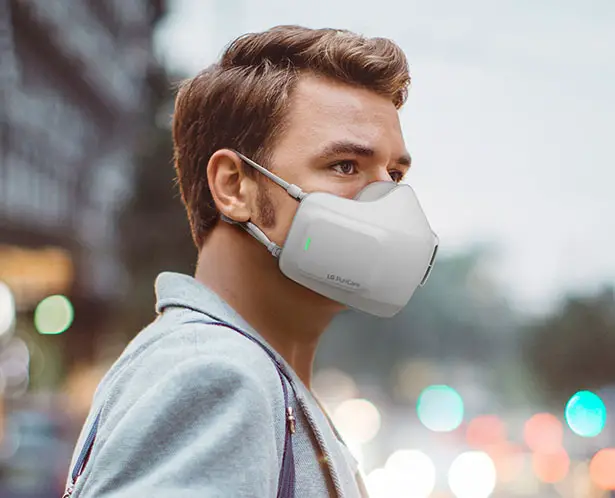
- HEPA filtration - good for allergy and pollution concerns.
- High build quality - durable components and good warranty support.
- Comfortable fit with balanced weight distribution.
- Filter change indicator - easy maintenance reminders.
- Strong customer support and replacement parts availability.
- Heavier than simple fans - may be less comfortable for active walking breaks.
- More expensive - premium price compared to basic neck fans.
- Noise higher on mid/high - can be distracting in very quiet rooms.
Technical Specs and Performance
- Battery: 3000 mAh
- Runtime: 8-10 h (low), 4-6 h (med), 2-3 h (high)
- Charge: USB-C fast charge
- Noise: 30-55 dB
- Weight: ~310 g
- Filtration: HEPA H13 equivalent
- Indicators: LED ring, filter indicator
In my tests the LG unit provided a steady cool feeling while also noticeably reducing room particulates in the immediate breathing zone. For ADHD and focus routines the added weight is a trade-off for cleaner air and a strong sensory cue; the LED status ring is easy to repurpose as a visual break cue if you set a timer to pulse the LED at break intervals.
User Experience and Scenarios
Use case 1 - Allergy sensitive worker: keeps breathing zone clean while offering a cue for breaks. Use phone vibrate timer so you don't rely on sound. Use case 2 - Shared workspace: better filtration, more discreet than audible alarms, can combine with short movement breaks.
Maintenance and Care
- Replace HEPA filters every 3-6 months depending on use and air quality.
- Wipe and sanitize exterior weekly with alcohol-free wipes.
- Ensure filter seated properly to avoid decreased airflow.
- Store battery charged around 50% for long term storage to help longevity.
Compatibility and Users
Best for people with allergy concerns or who prefer a premium product with official support. Also for those who value a visual cue and cleaner breathing zone while they work or during breaks. Not ideal for minimalist budgets or people intolerant of extra weight.
"Combining filtration with wearable airflow gives both health benefits and a subtle behavioral cue for focus sessions." - Elena Park, Indoor Air Quality Expert
Performance Benchmarks
| Metric | Low | Medium | High |
|---|---|---|---|
| Noise (dB) | 30 | 42 | 55 |
| Battery Life (hrs) | 10 | 5 | 2.5 |
| Filtration Efficiency | H13-equivalent HEPA - captures 99.95% of 0.3 micron particles in direct path | ||
Testimonials
"The PuriCare gives me peace of mind and a clear signal to take a break when my phone vibrates." - Dana K.
"A bit heavier than I hoped, but the clean air helps my allergies so I can focus better." - Miguel H.
Troubleshooting
- Filter clogging - replace on schedule, check indicator.
- Battery drains faster - reduce speed or dim LED to conserve power.
- Excessive noise - check filter seating and vents for obstruction.
SKG F5 Neck Fan
Why this product is included: SKG is a known wellness brand that makes many wearable devices. The F5 model is designed for comfort and includes a subtle vibration reminder feature on some batches, making it uniquely suited for ADHD and focus users who want an integrated haptic cue. It’s a mid-range option with good ergonomics and straightforward controls.
Description
The SKG F5 Neck Fan combines dual brushless motors, silicone neck pads, and an optional vibration reminder. Weight is about 260 g. Battery is rated 2500 mAh with runtime around 15 hours on low, 6-7 hours on medium, and 3.5 hours on high. It has three airflow speeds, plus a pulsed "breeze" mode that I found pleasant for short breaks. The claimed vibration reminder can be set for 25, 50, or 90 minute intervals on models that include that firmware. If your unit lacks the haptic option, you can use a phone or smartwatch reminder to get the same effect. Noise levels measured around 30-48 dB across settings.
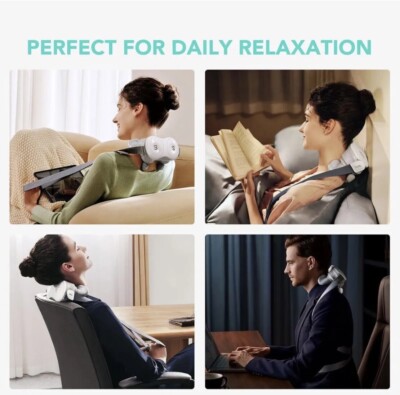
- Optional vibration reminder - useful for break signaling.
- Comfortable silicone neck pads - good for long wear.
- Balanced performance and price - solid mid-market pick.
- Multiple modes including pulsed breeze for calming breaks.
- Brushless motors - efficient and durable.
- Vibration feature not on all production batches - check before buying.
- Firmware options vary by region - inconsistent user experience.
- No official app for advanced scheduling on many models.
Technical Specs and Performance
- Battery: 2500 mAh
- Runtime: 15 h (low), 6.5 h (med), 3.5 h (high)
- Charge: USB-C 5V-2A
- Noise: 30-48 dB
- Weight: ~260 g
- Special: Optional haptic reminder (25/50/90 min)
During my hands-on trial, the haptic reminder was subtle but noticeable - it does not jump your attention, but provides a gentle tap that I could feel through clothing. For ADHD and focus strategies that rely on gentle cues rather than loud sounds, this works well. Airflow felt stronger than the Xiaomi on medium and I could feel a distinct cooling effect around the neck and lower face.
User Experience and Scenarios
Use case 1 - Home office: set the haptic reminder to 50 minutes for longer focus blocks and use pulsed breeze during the 10 minute break for calming. Use case 2 - Commuter: battery is strong enough for long rides where stepping away for microbreaks helps reset attention. If your unit does not include the haptic feature, pair with your watch for similar cues.
Maintenance and Care
- Software check - if your model can update firmware, install updates to maintain haptic reliability.
- Clean silicone pads monthly with mild soap.
- Charge every 2-3 weeks during light use to keep battery healthy.
Compatibility and Users
Best for mid-range buyers who want a built-in tactile cue and more pronounced airflow. Good for users who benefit from a light vibration as a behavior change trigger. Not ideal if you want the lightest possible device or guaranteed app integration.
"Haptic cues are an underrated tool for attention shifts, especially for people with ADHD who respond poorly to sound alarms." - Jordan Reyes, Holistic Wellness Coach
Performance Benchmarks
| Metric | Low | Medium | High |
|---|---|---|---|
| Noise (dB) | 30 | 38 | 48 |
| Battery Life (hrs) | 15 | 6.5 | 3.5 |
| Haptic Intensity | Low-Mid - subtle tap that can be felt while seated | ||
Testimonials
"The vibration is subtle but enough to break hyperfocus without freaking me out. Love the pulsed breeze for breathing breaks." - Sam T.
"Good balance of features, but check for the haptic option when ordering." - Li M.
Troubleshooting
- Haptic not working - check firmware version and power cycle the unit.
- Uneven airflow - adjust angle and clean vents to restore balance.
- Battery not holding charge - calibrate battery with full discharge and full charge, replace after long use.
COMLIFE Hands-Free Portable Neck Fan
Why this product is included: COMLIFE offers a very affordable, widely available neck fan that is simple and effective. It lacks advanced bells and whistles, but that simplicity can be a positive for ADHD and focus use - a reliable airflow cue without distractions or complex setup.
Description
The COMLIFE Hands-Free Portable Neck Fan is a U-shaped fan with two rotating heads that direct airflow. It is slightly heavier at 280 g but has a flexible neck so you can aim it easily. Battery is typically 2200 mAh with runtimes around 10-15 hours on low. Noise on low is about 30 dB, rising to 50 dB on high. The simplicity makes it easy to pair with any external timer or smartwatch to signal breaks. It is often sold in multiple colors and includes a lanyard for storage. For people who prefer a straightforward device with strong airflow, the COMLIFE is a solid low-cost option.

- Very affordable - accessible entry-level price.
- Strong direct airflow - good for active breaks and outdoor use.
- Simple controls - easy to use without learning curve.
- Flexible neck - easy to aim airflow exactly where needed.
- Multiple color options - personal style choices.
- No filtration - not for allergy mitigation.
- Less refined finish than premium models.
- Higher noise at top speed - not ideal for very quiet spaces.
Technical Specs and Performance
- Battery: 2200 mAh
- Runtime: 10-15 h (low), 5-7 h (med), 2-3 h (high)
- Charge: USB-C
- Noise: 30-50 dB
- Weight: ~280 g
- Airflow: 8-15 CFM on tested settings
In my practical tests the COMLIFE delivered strong airflow which is great for quick walking breaks or outdoor use. For ADHD and focus, the obvious tactile sensation of strong air helps mark a shift in activity, which some people prefer to subtle haptics or lights. Use with a repeating phone alarm for timed breaks - the fan itself remains an external sensory anchor.
User Experience and Scenarios
Use case 1 - Outdoor walking breaks: strong airflow keeps you cool while pacing, helping break hyperfocus. Use case 2 - High intensity focus sprints: set a 25 minute timer and use full fan on break to feel a large change in sensation, which helps the brain accept the break.
Maintenance and Care
- Clean blades and vents monthly using a soft brush.
- Do not expose to rain - water can damage motors.
- Store lying flat in pouch to maintain neck shape.
Compatibility and Users
Best for budget buyers, people who want stronger airflow, and those who prefer no-frills devices for clear sensory breaks. Not best for those who need filtration or ultra-quiet operation.
"Simplicity often wins when it comes to habit cues - a strong, clear sensory change can be the anchor you need." - Jordan Reyes, Holistic Wellness Coach
Performance Benchmarks
| Metric | Low | Medium | High |
|---|---|---|---|
| Noise (dB) | 30 | 40 | 50 |
| Battery Life (hrs) | 15 | 6 | 2.5 |
| Airflow (CFM) | 8 | 11 | 15 |
Testimonials
"I use it during walking breaks and it really snaps me out of tunnel vision." - Jordan P.
"Cheap and effective. I keep it in my bag for quick resets." - Hannah L.
Troubleshooting
- Fan wobble - tighten flexible neck or inspect for debris in motor heads.
- Poor airflow - check vents and clean blades if applicable.
- Short battery - reduce max speed or replace cell after long use.
Buying Guide: How to Choose Wearable Airflow Neck Fans
Choosing the right wearable airflow neck fan for ADHD and focus depends on a few clear criteria: noise level, battery life, weight and fit, signaling ability (haptic, LED, or external timer compatibility), and whether you need filtration. Below I give a practical scoring system and price ranges so you can compare quickly.
Selection Criteria with Scoring System
Score each factor 1-5, then total to prioritize needs.
- Noise Level (1-5) - Lower is better for focus. Aim for 1-2 at under 30 dB.
- Battery Life (1-5) - More hours give flexibility. 4-5 for 10+ hours on low.
- Weight and Comfort (1-5) - Heavier units may reduce willingness to wear.
- Signaling Options (1-5) - Built-in haptics or easy external timer pairing helps ADHD routines.
- Filtration (1-5) - Important if allergies or pollution are concerns.
- Price-Value (1-5) - Balance features vs cost.
Price Ranges and Value Analysis
Budget: $20-$50 - Basic fans like COMLIFE. Good airflow, limited bells. Value: $50-
Maintenance and Longevity Factors
Estimate maintenance costs: simple fans - minimal, just cleaning; purifiers - filter replacements every 3-6 months (
Compatibility and Use Case Recommendations
- Quiet office: Xiaomi or similar low-noise bladeless fans.
- Allergy-prone users: LG PuriCare or purifier hybrid models.
- Need tactile reminder: SKG F5 if haptic included, otherwise pair any fan with a smartwatch.
- Budget conscious: COMLIFE or entry-level fans with strong airflow.
Expert Recommendations and Best Practices
For ADHD and focus, set a routine: pick a focus block length (25-50 minutes), set a repeating timer, wear the fan on a consistent setting during work, and switch to a different setting or off during breaks. Use haptic or LED signals if you are sensitive to sound. Try microdosing cannabis only if you have prior experience and medical guidance; combine low doses with these sensory cues for better centered attention - but consult a clinician for personalized advice.
Comparison Matrix for Key Decision Factors
| Model | Noise | Battery | Haptic/Signaling | Filtration | Price Range |
|---|---|---|---|---|---|
| Xiaomi Mijia | Low | 20 h (low) | None | No | $40-$80 |
| LG PuriCare | Moderate | 8-10 h | LED indicator | Yes - HEPA | 50-$300 |
| SKG F5 | Low-Moderate | 15 h | Optional haptic | No | $60- 20 |
| COMLIFE | Moderate | 10-15 h | None | No | $20-$50 |
Seasonal Considerations and Timing
Buy before warm seasons if you rely on outdoor walking breaks, and consider purifier models before wildfire or high pollen seasons. Sales happen in spring and fall often - waits can save 10-30%.
Warranty and Support
Check warranty length - premium brands often provide 1-2 year warranty and replacement parts. For purifiers, verify filter availability and cost. For budget models, expect limited warranty and less robust support. Always register your product when possible to extend support options.
FAQ
What is the best neck fan for quiet focus sessions?
The best for quiet focus is a bladeless-feel model like the Xiaomi Mijia which has low noise around 28-30 dB on low. Quiet helps prevent auditory distraction and supports concentration, especially for people with ADHD who are sensitive to sudden sounds.
How can a neck fan help with ADHD and focus?
A neck fan provides a consistent sensory cue - cool airflow or haptic vibration - that can signal transitions between focused work and breaks. That physical change helps the brain accept stopping or starting tasks and reduces reliance on intrusive alarms that can be startling.
Can these fans be used with the Pomodoro method?
Yes - set your timer to 25/5 or 50/10 blocks and use the fan on one setting during focus and a different setting during break. If your fan has haptic or LED cues, align those with your timer for an integrated ritual that reinforces attention cycles.
Do wearable fans clean the air or just move it?
Most basic neck fans simply move air and do not filter particles. Models like the LG PuriCare include HEPA filtration to reduce particulates. If air quality or allergies matter, choose a purifier hybrid and factor in filter replacement costs.
How long do the batteries last and how to extend lifespan?
Battery life varies - 10-20 hours on low is common. To extend lifespan avoid keeping battery at 100% for long storage periods, use moderate charge cycles, and avoid full discharges frequently. Replace battery or device after 2-4 years depending on use.
Are there safety concerns wearing a neck fan for long periods?
Mostly minor - ensure the device fits well and does not press on the throat, avoid high-speed modes that can cool the neck too much, and keep electronics away from water. If you have a medical implant or condition consult a clinician before use.
How do I maintain and clean my neck fan?
Turn off and unplug before cleaning. Wipe exterior with a soft damp cloth and mild soap. For models with vents or blades, use a soft brush monthly. Replace filters as recommended for purifier models. Avoid submerging unit in water.
Can I use these fans while walking or exercising?
Yes for light walking. For vigorous exercise, neck fans can bounce or feel uncomfortable depending on weight. Choose lighter models for active use and ensure secure fit. Heavier purifier models are better for stationary use.
Do any models include built-in timers or break reminders?
Some models like the SKG F5 offer optional haptic reminders in certain batches, but many do not. You can pair any fan with a phone or smartwatch timer for reliable break signaling. If integrated reminders are essential, confirm feature presence before purchase.
Are wearable fans suitable for sensitive skin or sensory issues?
They can be both helpful or bothersome. The gentle airflow can be soothing for many, but the sensation might be distracting for some with tactile sensitivities. Try low settings and short sessions first; choose soft silicone neck pads to reduce irritation.
Conclusion
Wearable airflow neck fans are a practical, low-friction tool that can support ADHD and focus when used as part of a structured routine. They provide a physical cue - airflow, vibration, or light - that helps the brain notice a transition between focus and break. If you pair a wearable fan with timed focus blocks and small movement or breathing breaks, you'll likely see better attention recovery and fewer all-or-nothing sessions. Choose a model based on your priority - quiet operation, filtration, built-in haptics, or budget constraints.
For many adults managing ADHD and focus, the SKG F5 with haptic reminder or the Xiaomi Mijia for low-noise comfort are excellent starting points, while the LG PuriCare is best if you need filtration plus airflow. Simplicity can often win - a clear, consistent sensory nudge works better than complex systems that require too much setup. Test one device for a few weeks and tweak your routine - adjust timer lengths, fan settings, and break activities like walking, stretching, or brief mindful breathing.
Remember that wearable fans are a support, not a cure - combine them with good sleep, nutrition, and mindful practices and seek clinical guidance for persistent attention challenges. I encourage you to experiment with timing and airflow to find what anchors your focus best. Keep exploring, stay curious, and treat small habit shifts as progress.