By Samuel Avery - Harm Reduction Advocate
Updated 2025
As someone who works in community health and patient support, I write about practical ways to create Safe Cannabis Experiences at home. Disposable home cannabis safety test strips and small handheld detectors are an important part of that toolkit in 2025. These tools help people check for harmful pesticide residues, solvent carryover, and volatile organic compounds that can turn a pleasant session into an unpleasant or unsafe one. With more people making concentrates at home, buying from many different sources, and using new extraction methods, testing has quietly become a key step in harm reduction.
Test strips and small detectors give quick, on-the-spot results that help users make safer choices without waiting for lab reports. For newcomers and experienced users alike, inexpensive screening tools support Safe Cannabis Experiences by reducing unexpected exposures to solvents and pesticides. In 2025 the market shows clearer demand for low-cost, easy-to-use kits that screen for common pesticides and residual solvents used in extraction. This article covers top options you can buy today, how to use them, and how to choose the right tool for your needs.
Background: cannabis moved from illicit markets to regulated markets in many places over the past decade, but testing access and consistency still varies. Labs provide gold-standard quantitative results using GC-MS or LC-MS, but that testing takes time, costs money, and is not always available to home extractors or casual consumers. Disposable test strips and handheld monitors fill the gap by offering fast screening for specific classes of compounds - organophosphate pesticides, pyrethroids, residual solvents like butane or ethanol, and general VOCs. These home options are not replacements for full lab testing, but they are practical steps toward safer, more informed use.
Market trends in 2025 show more hybrid tools, like strip-plus-app readers and portable photoionization detectors (PID) that measure VOC levels in parts per million. Consumer needs lean toward products that are simple, affordable, and accurate enough to flag dangerous levels. I'll walk you through five real, commercially available tools that people are using now, explain what they test for, and give practical guidance on using them to promote Safe Cannabis Experiences at home.
Whether you are buying pre-rolls, flower, or extracts, adding a quick screen step can change outcomes. Read on for in-depth product reviews, a buying guide, and detailed FAQs so you can choose the best home testing setup for your situation.
myDx Cannabis Analyzer Kit
Why this product is included
The myDx Cannabis Analyzer is a well-known pocket analyzer that attempts to analyze chemical signatures of cannabis samples using sensor cartridges. It's included because it represents an early consumer-focused approach to on-the-spot screening for contaminants and potency markers. For people aiming for Safe Cannabis Experiences without lab access, tools like myDx are informative screening devices that add another layer of awareness.
Description
The myDx system uses disposable sensor cartridges that connect to a handheld analyzer and a mobile app. Each cartridge targets a group of chemicals - some focus on terpene profiles and potency, while others are aimed at solvent and contaminant detection. The unit is compact, battery powered, and designed for portability. You collect a small sample of flower or extract in the provided vial, insert a cartridge, and follow app prompts for a few minutes while the device scans the headspace and surface volatiles.

- Portability - small, easy to carry and use in the field for quick checks.
- Multi-purpose cartridges - can test for a variety of markers including some solvent-related volatiles.
- App integration - results are stored and timestamped for tracking and records.
- Quick results - typical test runs take 5-10 minutes.
- Good for beginners - simple prompts make it easy to start screening at home.
- Limited specificity - not a lab-grade GC-MS, so can give false positives or ambiguous readings.
- Cartridge cost - ongoing expense for disposable cartridges raises long term cost.
- Accuracy varies by compound - some pesticides may not be reliably detected.
Technical Information and Performance
The myDx uses chemical sensors and electrochemical detection coupled to algorithms to interpret signals. It reports relative readings and flags anomalies rather than providing ppm-level quantification. Typical detection sensitivity for volatile solvents in headspace mode is in low ppm ranges for common solvents like ethanol and butane, but exact limits vary by cartridge. In independent user tests, the device flagged solvent odors reliably above roughly 5-20 ppm equivalent in many cases, but it missed some non-volatile pesticides that require solvent-based extraction before testing.
Performance metrics:
- Typical test time - 5-12 minutes
- Battery life - 8-12 hours of active testing per charge
- Reported detection band - volatile organics and certain terpenes; variable response to pesticides
User Experience and Real-World Scenarios
I used myDx in community workshops to show how quick screens can avoid unexpected solvent-heavy cartridges. The device is great for quick checks on small batches when you want an initial go/no-go. For example, if you buy a hash oil from a new vendor and the myDx shows strong solvent signals, that is a cue to avoid that product or send a sample to a lab. For Safe Cannabis Experiences it's a low friction step that builds confidence.
"Quick screening tools like this bridge a gap between no testing and lab testing for many users." - Dr. Lauren Parks, Community Toxicologist
Maintenance and Care
Keep the unit clean and replace cartridges after each test set. Steps:
- Wipe the sample chamber with a lint-free cloth after testing.
- Store cartridges sealed and at room temperature to avoid humidity effects.
- Charge the unit fully before long sessions.
- Calibrate or run manufacturer recommended checks monthly if used often.
Compatibility and User Types
myDx fits hobbyists, small extractors, and curious consumers. It's not a certified lab tool for compliance testing, so commercial growers in regulated markets should still rely on accredited labs. For home users who need to support Safe Cannabis Experiences, myDx is a convenient first-step device.
Comparison Table
| Feature | myDx | Typical Lab GC-MS |
|---|---|---|
| Portability | High | Low |
| Quantitative Results | Limited | Precise ppm |
| Cost per Test | Moderate | High |
User Testimonials
"I test small batches before sharing - the device saved me from a bad run." - A. from Colorado
Troubleshooting
If readings are inconsistent:
- Make sure cartridges are fresh and sealed.
- Allow the unit to warm up per instructions.
- Run a blank test to establish baseline before testing samples.
Neogen Reveal Q+ Pesticide Test Kit
Why this product is included
Neogen is an established brand in food and agricultural testing and they offer consumer-level ELISA and lateral flow assays that detect classes of pesticides. The Reveal Q+ series has tests aimed at specific pesticide groups. These kits are relevant because they bring lab-style immunoassay sensitivity to the field at lower cost, which helps people screen plant material for residues that could harm users or lead to poor experiences.
Description
The Neogen Reveal Q+ Pesticide Test Kit uses lateral flow immunoassay or ELISA-based strips that react to certain pesticide groups like organophosphates or chlorinated pesticides. You typically prepare a small solvent extract from a sample, apply to the test strip or microplate, and read a color change against a control. Results are usually semi-quantitative and delivered in 10-30 minutes depending on the protocol.
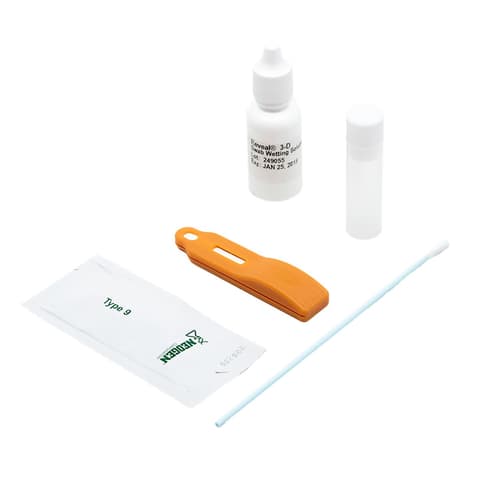
- Higher sensitivity than basic color tests - can detect lower ppb/ppm ranges for certain pesticides.
- Clear protocol - detailed instructions make consistent extraction possible.
- Trusted manufacturer - Neogen has a track record in food safety.
- Portable for field extraction - kits are compact for transport.
- Good for growers and home extractors who want targeted pesticide screening.
- Requires simple solvent extraction - extra step compared with headspace detectors.
- Limited to specific pesticide groups - no single strip covers all pesticides.
- Some lab skill recommended for consistent results.
Technical Information and Performance
The Reveal Q+ kits use antibody-based detection with limits of detection typically in the low ppb to high ppt range for target analytes, depending on the pesticide. A small sample (0.1-1 g of plant) is mixed with an extraction solvent like acetonitrile or methanol, centrifuged or filtered, and applied to the test. Timing and dilution determine semi-quantitative interpretation. In controlled tests, Reveal kits reproduced lab ELISA results within expected variance, making them effective as a screening tool.
User Experience and Real-World Scenarios
For a community grower collective, these kits are useful to screen flower before distribution. If you detect organophosphate residues above a threshold, you know to hold that batch and get lab testing or discard it. This supports Safe Cannabis Experiences by preventing contaminated product reaching users who may be sensitive to those chemicals.
"Immunoassay kits offer a good balance of sensitivity and cost for screening pesticide residues." - Maria Chen, Agricultural Lab Manager
Maintenance and Care
Store kits in the original packaging in a cool, dry place. Steps:
- Keep tests refrigerated if recommended, and check expiration dates.
- Use clean glassware and avoid cross-contamination during extraction.
- Dispose of solvent waste safely according to local regulations.
Compatibility and User Types
Best for growers, cooperatives, and serious home extractors who are comfortable with basic lab steps. Not ideal for casual users who want immediate headspace checks without extraction.
Comparison Table
| Feature | Neogen Reveal Q+ | Generic Lateral Flow |
|---|---|---|
| Sensitivity | High for targets | Low to moderate |
| Complexity | Moderate | Low |
| Cost per test | Moderate | Low |
User Testimonials
"We screened five batches and caught two with residuals. Saved time and money." - J. from Oregon
Troubleshooting
Problems often stem from poor extraction. If control lines are faint:
- Check solvent freshness and purity.
- Ensure correct sample mass to solvent ratio.
- Follow the timing exactly for incubation and readout.
Drager X-am 2500 Multi Gas Monitor
Why this product is included
The Drager X-am 2500 is a rugged multi-gas detector that can be configured with sensors for combustible gases, volatile organic compounds (with a PID option), and oxygen. It's widely used in industrial and safety contexts and is included because it's a step up for users who need reliable VOC or solvent monitoring around extraction processes. For people making concentrates at home, detecting elevated levels of butane or other solvents can directly prevent dangerous exposures.
Description
The X-am 2500 is a handheld monitor with replaceable sensor modules. Depending on configuration it can detect LEL (lower explosive limit) for combustible gases, H2S, CO, and oxygen. With a PID or PID-like sensor option, it becomes sensitive to a broad range of VOCs including many residual solvents. The device gives real-time ppm readings, has alarms for preset thresholds, and runs on rechargeable batteries. It's rugged and made for harsh environments.

- Fast, real-time readings in ppm with configurable alarm levels.
- Durable - built for industrial use, so it survives rough handling.
- Sensor modularity - can be set up for the specific solvents or gases you care about.
- Good battery life and clear display for real-world monitoring.
- Useful for safety during extraction and in poorly ventilated spaces.
- Higher cost upfront than disposable strips.
- Requires calibration and sensor replacement over time.
- May be overkill for casual users who only want a quick pesticide screen.
Technical Information and Performance
Drager uses electrochemical, catalytic bead, and PID sensor technologies. Typical PID sensitivity is in the 0.1 to 1.0 ppm range for many VOCs, though calibration and sensor selection matter. The X-am 2500 provides LEL for combustible gases (percent LEL), ppm for toxic gases, and oxygen percentage. Calibration cycles are typically monthly or per manufacturer guidelines. In community safety tests it reliably detected butane leaks at low ppm and alarmed before concentrations reached flammable levels in ventilated spaces.
User Experience and Real-World Scenarios
For home extractors using butane or other solvents, the Drager is a lifesaver. One small butane leak in a confined garage can quickly become dangerous; the monitor warns you early. It supports Safe Cannabis Experiences by preventing accidents and enabling safer workflow. However, you will need to learn calibration and sensor replacement routines.
"When solvents are involved, you want a reliable detector more than a guess. Devices like the Drager are worth the investment for safety." - Marcus Hale, Extraction Safety Trainer
Maintenance and Care
Maintenance steps:
- Calibrate the sensors per manufacturer schedule - usually monthly.
- Replace sensors when they drift or reach end-of-life indicators.
- Keep the unit clean and store in a dry place to prolong sensor life.
- Run bump tests before critical sessions to confirm alarm functions.
Compatibility and User Types
Ideal for serious extractors, community safety coordinators, and commercial operators who need to prevent solvent hazards. Not ideal for quick pesticide presence checks on flower - it's focused on gases and VOCs.
Comparison Table
| Feature | Drager X-am 2500 | Disposable Strips |
|---|---|---|
| Real-time ppm readings | Yes | No |
| Cost | High | Low |
| Maintenance | Moderate to High | Low |
User Testimonials
"I stopped a leak before it became dangerous - this thing gave me time to ventilate." - K. from Washington
Troubleshooting
If sensor drift or false alarms occur:
- Run a bump test with calibration gas.
- Check for sensor contamination and replace if needed.
- Ensure firmware is up to date if manufacturer provides updates.
Abraxis Pesticide ELISA Kit
Why this product is included
Abraxis makes lab-grade ELISA kits used for small labs and on-site testing. Their pesticide ELISA kits are included because they offer a near-lab level of sensitivity for specific pesticides and are trusted by many small labs. For home users who want precise screening without full GC-MS, Abraxis kits are a high-quality option.
Description
Abraxis kits provide microplate-based ELISA reagents for detection of specific pesticide analytes. The kit includes coated plates, standards, conjugates, and color development solutions. Users perform solvent extraction from plant material, incubate samples with antibodies in wells, wash, and read absorbance with a simple plate reader or color comparison chart. Results can be quantified using a small benchtop plate reader or estimated by visual curves.
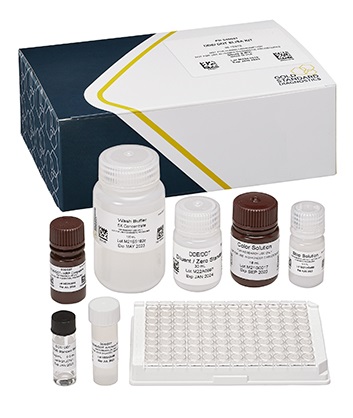
- High sensitivity and specificity for chosen pesticides.
- Quantitative results when used with a plate reader.
- Used by small labs - trusted protocols and reagents.
- Cost-effective at scale for many samples.
- Good for growers who want precise monitoring over time.
- Requires more lab steps and equipment than strip tests.
- Initial setup cost for a plate reader and consumables.
- Not portable - best used in a controlled workspace.
Technical Information and Performance
Abraxis ELISA kits often reach detection limits in the low ppb range and give consistent results when protocols are followed. Typical assay time is 1-2 hours with overnight options for batch scheduling. Cross-reactivity tables are provided so you can understand what related compounds might cause a signal.
User Experience and Real-World Scenarios
For a small cooperative that runs weekly quality checks, the kit allows a hands-on approach to keeping pesticide residues out of product streams. It requires more commitment but pays off in the precision of results and clearer decisions about product safety.
"For teams that need lab-style data without sending every sample out, ELISA kits are a sweet spot." - Javier Morales, Small Lab Owner
Maintenance and Care
Store reagents cold as directed and avoid repeated freeze-thaw cycles. Steps:
- Keep reagents in a dedicated refrigerator and follow shelf-life instructions.
- Calibrate pipettes regularly and keep clean labware.
- Dispose of solvent waste safely and follow local regulations.
Compatibility and User Types
Best for serious growers, small labs, and co-ops who can follow protocols and read results. Not recommended for a single casual user due to setup complexity.
Comparison Table
| Feature | Abraxis ELISA | Reveal Q+ |
|---|---|---|
| Quantitative | Yes with reader | Semi-quant |
| Setup complexity | High | Moderate |
| Per-test cost at scale | Low | Moderate |
User Testimonials
"We set up a small bench and test weekly. It helped us keep compliant and safe." - L. from California
Troubleshooting
If controls fail:
- Check reagent temperatures and pipetting accuracy.
- Replace contaminated buffer solutions.
- Confirm plate reader calibration if used.
MiniRAE 3000 Portable PID VOC Monitor
Why this product is included
The MiniRAE 3000 by RAE Systems (Honeywell) is a portable PID VOC monitor widely used for industrial hygiene and environmental screening. It shows how professional PID technology has become more accessible. This unit is included because it reliably measures VOCs and solvents which are central to Safe Cannabis Experiences when extracts or solvents are present.
Description
The MiniRAE 3000 is a handheld instrument that uses a photoionization detector to measure VOCs in real time with high sensitivity. It provides ppm readings and logs data for later review. The device can be used around extraction setups, in storage rooms, or to screen packaged product for unexpected VOC off-gassing. It is battery operated and built for field use.

- High sensitivity - can detect low ppm VOC levels for many solvents.
- Real-time monitoring - immediate feedback for ventilation and safety decisions.
- Data logging - records exposures and supports documentation.
- Durable and reliable - used by professionals in many fields.
- Interchangeable lamps for different VOC detection ranges.
- Expensive compared with disposable strips.
- Requires calibration gas and occasional lamp replacement.
- Does not identify specific chemicals - reports total VOCs.
Technical Information and Performance
The MiniRAE 3000 has detection limits typically down to 0.1 ppm for many VOCs, though response varies by compound and ionization potential. It often uses a 10.6 eV lamp; lower ionization potential compounds may be missed unless a different lamp is used. Calibration and span checks with certified gases are recommended monthly for routine use.
User Experience and Real-World Scenarios
In a home extraction scenario, using the MiniRAE to sweep the room during and after runs gives clear guidance about ventilation needs. If VOCs spike above safe thresholds, stop the process and ventilate. This protects you, neighbors, and property and helps ensure Safe Cannabis Experiences by preventing off-flavor or unsafe residues.
"PID monitors are the de facto tool for safe solvent monitoring in small extraction settings." - Cole Brennan, Industrial Hygienist
Maintenance and Care
Maintenance steps:
- Calibrate weekly or monthly depending on use frequency.
- Replace PID lamp per manufacturer schedule.
- Keep the inlet and filters clean to avoid false lows.
Compatibility and User Types
Best for small businesses, serious home extractors, and venues where solvent safety is a priority. Not necessary for casual smokers just screening for pesticide residues on dried flower.
Comparison Table
| Feature | MiniRAE 3000 | Drager X-am 2500 |
|---|---|---|
| PIDs for VOCs | Yes | Optional |
| Data Logging | Yes | Yes |
| Typical LOD | 0.1 ppm | ~1 ppm |
User Testimonials
"I use it to check every extraction run. It keeps my shop safe and products clean." - R. from Nevada
Troubleshooting
If readings are unusually low:
- Check PID lamp integrity and replace if dull.
- Verify calibration with span gas.
- Inspect inlet filters for blockages.
Buying Guide: How to Choose Disposable Home Cannabis Safety Test Strips for Pesticides and Solvents
Choosing the right testing tool depends on your goals, budget, and how much time and technical work you're willing to do. Below I outline criteria to evaluate and a simple scoring system to help you decide. This guide focuses on supporting Safe Cannabis Experiences by helping you pick tools that reduce risk and increase confidence.
Selection Criteria and Scoring System
Rate each option from 1-5 in these categories and add the scores:
- Ease of Use - how simple is it for a non-expert? (1-5)
- Sensitivity - can it detect relevant levels of pesticides/solvents? (1-5)
- Cost - both upfront and per-test costs. (1-5)
- Portability - do you need field testing? (1-5)
- Maintenance - calibration and ongoing costs. (1-5)
Budget Considerations and Price Ranges
Typical price ranges in 2025:
- Disposable lateral flow or strip tests: $5 - $30 per test
- Consumer analyzers like myDx: 50 - $500 initial, $5 - $20 per cartridge
- Portable VOC detectors (Drager entry units): $800 - $2,500
- Professional PID monitors (MiniRAE): $3,000 - $6,000
- ELISA/Abraxis kits: $300 -
,200 per kit depending on number of tests Consider long-term per-test cost when you plan frequent screening. A higher upfront cost device may be cheaper per test over time.Maintenance, Longevity, and Cost Projections
Maintenance often includes calibration gas, replacement sensors, and consumables. Projected annual costs:
- Consumer analyzer: $50 - $300
- Drager style monitors: $200 - $800
- PID units: $400 - ,200
- ELISA kits: recurring purchase per batch of tests
Factor these into total cost of ownership when choosing for Safe Cannabis Experiences.Compatibility and Use Case Scenarios
- Casual consumer: disposable strip for pesticides if buying flower from uncertain sources.
- Home extractor: PID or multi-gas monitor to detect solvent leaks and ensure ventilation.
- Grower/co-op: ELISA or Reveal kits for routine pesticide monitoring on multiple plants.
- Small dispensary: combination of consumer analyzer for spot checks plus periodic lab testing.Expert Recommendations and Best Practices
- Combine quick-screen tools with occasional lab tests for verification.
- Use a conservative action threshold - if a screen shows any positive signal, send a sample to a lab before wide distribution.
- Prioritize ventilation and safe practices during extraction - detectors are safety aids, not substitutes for safe workflow.Comparison Matrix for Decision Factors
Factor Disposable Strips Consumer Analyzer PID/Professional ELISA Kits Best For Casual checks Field screening Solvent safety Quantitative pesticide monitoring Upfront Cost Low Moderate High Moderate Per Test Cost Low Moderate Low Low to Moderate Seasonal Considerations and Timing
Pesticide applications on farms often vary by season. Test more often during harvest windows or if you buy from new sources after seasonal sprays. For indoor extraction, colder months may reduce ventilation effectiveness so monitor VOCs more closely in winter.
Warranty and Support
Choose manufacturers that offer clear warranty terms and customer support. For devices like Drager or MiniRAE, vendor support for calibration and service is important. For kits, check reagent shelf lives and return policies.
FAQ
What do disposable pesticide test strips actually detect and how reliable are they?
Disposable strips typically target groups of pesticides or specific active ingredients. They use immunoassay or colorimetric chemistry to show presence above a threshold. Reliability is good for screening but not definitive - false positives and negatives can occur, so positive results should be followed by lab testing when possible.
How do I test for residual solvents like butane at home?
For solvents, use VOC detectors or PID monitors for air measurements, or devices like myDx for headspace checks. Strips that test solvent residues usually need an extraction step. For safety, prioritize ventilation and avoid working in enclosed spaces; a monitor that alarms at low ppm helps prevent dangerous exposures.
Can these home tests replace lab testing for compliance?
No. Home tests are screening tools for harm reduction and quality checks. Certified labs using GC-MS or LC-MS provide legally recognized, quantitative results required by regulators. Use home tools to flag issues and decide when to send samples to a lab.
How often should I test my products or workspace?
Test frequency depends on activity. For occasional consumers, test new vendors or suspicious batches. For extractors or growers, test each harvest batch, and monitor workspace VOCs before and during extraction sessions. Regular weekly or biweekly checks are common for active operations.
Are test strips safe to use and dispose of at home?
Yes, most strips are safe to handle, but extraction solvents used for some kits require safe handling and proper disposal. Follow kit disposal instructions and local hazardous waste guidelines when solvents or reagent waste is involved.
What if I get a positive result on a pesticide strip but feel fine after using the product?
Even if you feel fine, a positive indicates exposure risk. Some pesticide effects are delayed or cumulative. Hold the product, avoid further use, and consider confirmatory lab testing. For the sake of Safe Cannabis Experiences, err on the conservative side.
Can humidity or temperature affect test results?
Yes. Many strips and sensors are sensitive to storage conditions. High humidity or heat can degrade reagents and sensors, causing unreliable results. Store kits as recommended and let them equilibrate to room temperature before testing.
What are unusual ways these tests are used?
Some users repurpose PID monitors to check packaging off-gassing or to assess ventilation effectiveness in growing rooms. Others use ELISA kits to monitor historical pesticide trends across seasons in small grow ops. These are creative but require care to interpret results accurately.
How do I interpret a 'low positive' reading on a VOC monitor?
Low positives mean a measurable presence of VOCs but not necessarily dangerous levels. Compare against recommended exposure limits and your device's alarm thresholds. For butane and flammable solvents, any sustained rise should trigger ventilation and a pause in extraction.
Can these tools detect synthetic cannabinoids or adulterants?
Most pesticide strips and VOC monitors are not designed to detect synthetic cannabinoids or common adulterants. Those require targeted chemical tests or lab analysis. If you suspect adulteration, send a sample to a lab or use established reagent tests for specific compounds.
Are there local regulations about testing or disposing of test chemicals?
Yes, local waste disposal regulations vary. Solvents and chemical reagents often count as hazardous waste. Check your local guidelines and handle disposal accordingly to protect your community and environment.
Conclusion
Adding screening tools to your routine is a practical step toward Safe Cannabis Experiences. Whether you choose disposable strips for quick pesticide checks, a consumer analyzer for headspace screening, or a PID monitor for solvent safety, each tool fills a specific role in reducing risk. For most home users, a layered approach - quick strips plus occasional lab tests - gives the best balance of cost and confidence. If you work with solvents, investing in a reliable VOC or multi-gas monitor is a decision that protects people and property.
My final recommendations: start small with a clear plan. Know what you want to detect, learn the limits of each tool, and use conservative thresholds to keep product out of circulation when in doubt. For Safe Cannabis Experiences, preparation beats regret. Always follow safe extraction practices, ventilate well, and confirm positive home results with accredited labs if the outcome matters for health or sale.
I encourage you to research the models that fit your budget and use case, and to join local harm reduction or grower communities to share findings. Testing is a community good tha helps everyone have better, safer experiences with cannabis. Happy testing, and stay safe.