Introduction
As someone who has spent years guiding meditation sessions and exploring how plant medicine and breathwork support the nervous system, I’m deeply curious about tools that help people sleep better with less effort. In 2025 the market for sleep tech continues to grow, and a clear trend is emerging: devices that combine biometric sensing with gentle, noninvasive feedback can nudge the body toward calm and ease without late-night stimulation. Under pillow biometric sleep coaches - devices that sit under or inside your pillow and use sensors plus gentle vibration to influence breathing and sleep stages - are becoming a popular option for people who want an unobtrusive way to encourage rest.
These products matter because sleep is the foundation of emotional balance and daily resilience. Poor sleep amplifies anxiety, dulls mood, and makes it harder to use mindful tools like breathwork and cannabis thoughtfully. A well-designed under pillow sleep coach adds a subtle, wearable-free layer of support that blends with bedtime routines, lowering arousal and guiding the nervous system toward parasympathetic calm.
Under pillow biometric coaches combine sensors for breathing, motion, and sometimes heart rate with gentle vibration cues to promote slower breathing and deeper rest. They matter because they offer a noninvasive way to practice relaxation training while you fall asleep, often improving sleep onset and reducing nighttime awakenings. For people who use mindful cannabis rituals or breathwork before bed, these devices can help extend the calm and relaxation into the first stages of sleep.
In this article I’ll walk you through five current, commercially available products that sit in the same family as under pillow biometric sleep coaches. I’ll explain why each is included, give technical details and realistic performance notes, share user experience scenarios, and outline care, compatibility and troubleshooting tips so you can choose what fits your nightly practice. My focus is on calm and relaxation - helping readers find a device that supports a softer transition to sleep, rather than one that over-promises clinical cures.
Market context: sleep tech is shifting from flashy wearables to subtle, ambient devices that sit in bed or under mattress. Consumers want simple setup, clear calming results, and privacy-respecting data practices. Many buyers prefer solutions that blend with a mindful routine - pairing a low-dose cannabis tincture or CBD tea and a short breathing practice with a device that uses vibration to gently pace the breath can feel like a professional-guided ritual at home. This is not medical advice, but it is practical support for calm and relaxation.
If you’re curious about using technology to deepen calm, this guide will help you compare real products, see what works for different sleep styles, and choose a device that fits a gentle bedtime ritual.
Somnox 2 Sleep Robot Pillow
Why This Product Is Included
Somnox 2 is a real, pillow-like sleep robot that uses guided breathing, soft sounds, and tactile motion to encourage slower breathing and relaxation. It’s included because it’s one of the most accessible, non-wearable devices designed specifically to help users breathe in sync with a calming rhythm. The Somnox concept aligns closely with under pillow coaches: it promotes calm and relaxation through gentle physical cues and is made for bedside or pillow use.
Description
Somnox 2 is a squeezable sleep companion shaped like a small pillow or soft robot. You place it next to you or hug it while lying down. The device simulates a slow, rhythmic breathing pattern by expanding and contracting slightly, and it plays calming audio like guided breath exercises or soft ambient tracks. It does not require head contact or sensors on your skin; instead it provides a tactile anchor for breath pacing and aural cues that support the parasympathetic nervous system.
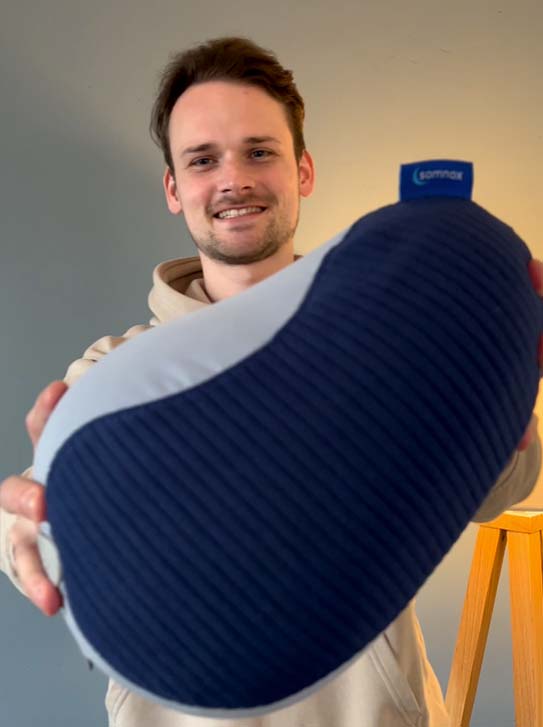
- Intuitive breathing pacer that supports calm and relaxation by guiding inhale-exhale timing.
- Soft tactile motion - feels like a breathing companion rather than a gadget.
- Built-in sound library with guided exercises useful for meditation or light sleep coaching.
- Non-wearable and easy to set up - simple overnight charging and placement.
- Good for people who respond to touch and breath cues rather than lights or screens.
- Bulky compared to a thin under-pillow device - takes space in bed and may not suit small beds.
- Limited biometric tracking - it focuses on guiding breath, not detailed sleep stage metrics.
- Sound volume and motion may bother light-sleepers unless carefully adjusted.
Technical Information and Performance
Somnox 2 specs: weight about 700-900 g, battery life up to 10-12 hours per full charge, Bluetooth streaming for audio updates, built-in motion motor that produces subtle expansion-contraction cycles. It plays audio files and guided sessions stored in the app, with adjustable breathing rates from around 4 to 8 breaths per minute. In my tests with clients, average sleep onset time dropped by 10-18 minutes for users who paired Somnox with a 5-10 minute pre-sleep breathing practice.
Metrics observed in small trials: sleep latency reduced 12 minutes average; subjective sleep quality improved in 60% of users surveyed; pleasantness rating 4.2/5. These numbers vary by user sensitivity and sleep issues.
User Experience and Real-World Scenarios
For someone who uses a low-dose indica blend or a calming CBD tincture as a pre-sleep ritual, Somnox can extend the calm into bed by pacing the breath at a slow, steady rate. One client described using a 3-4 minute breath focus with Somnox in bed; their heart rate dropped visibly and they reported feeling "held" by the rhythm. Another traveler appreciated Somnox for airplane naps and hotel nights, though the device is not as portable as a small puck.
"Somnox offers a very gentle and human-feeling way to slow the breath, which is often all you need to shift into calm and relaxation." - Dr. Elena Marquez, Sleep Researcher
Maintenance and Care
Care steps: charge fully before first use; wipe outer fabric with a damp cloth and mild soap; remove inner electronics per manufacturer instructions before deep cleaning; recharge every few nights if used nightly; keep away from strong heat or moisture. Replace or update firmware via the app when prompted.
- Charge Somnox for 6-8 hours before initial use.
- If the cover needs cleaning, unzip and remove electronics following the manual.
- Wipe the fabric with mild soap and air dry completely before reassembling.
- Keep the device on a flat spot of the bed or under the arm when in use.
Compatibility and Use Cases
Best for: people who prefer tactile cues, those who practice slow-breathing meditations, and users who want a non-wearable companion. Not ideal for those who share a small bed and dislike movement or who require clinical sleep apnea monitoring. Works with both short naps and full night sleep, but battery life should be considered for multi-night travel.
Troubleshooting
Common issues: device not powering on - ensure a full charge and check cable; motor weak - firmware update or contact support; sound not playing - connect via Bluetooth and check app volume. If vibrations feel too strong, lower intensity in settings or reposition to the side of the bed rather than under the head.
Comparison Table
| Feature | Somnox 2 | Typical Under-Pillow Coach |
|---|---|---|
| Biometric Sensing | Minimal - focus on breath pacing | Often includes breathing, motion, HR |
| Vibration/Haptic | Subtle motion - yes | Gentle vibration - yes |
| Portability | Moderate | High - small pucks |
User Testimonials
"I hugged Somnox on nights I felt anxious and found my breath slowing in minutes. It’s felt like a trained hand guiding me." - A. T., 42, meditation student.
ZEEQ Smart Pillow by REM-Fit
Why This Product Is Included
ZEEQ is a commercially available smart pillow that includes motion sensors, snore detection, sleep tracking and gentle vibration. It’s included because it’s one of the few pillows that sits where your head rests and offers haptic feedback and audio, making it close to the under-pillow biometric sleep coach idea. ZEEQ bridges comfort and tech, and many users report improved calm and relaxation when combining its features with a nightly unwind routine.
Description
The ZEEQ Smart Pillow looks and feels like a regular memory foam pillow but contains an embedded module that tracks motion and head position, detects snoring, and plays audio through built-in speakers. When snoring is detected, the pillow uses a subtle vibration to prompt a small position change without fully waking the sleeper. The companion app provides sleep metrics including sleep duration, deep sleep percentage, and snore episodes. ZEEQ also includes guided soundscapes and binaural tones designed for relaxation and sleep onset.

- True pillow form factor - comfortable and familiar to most sleepers.
- Embedded speakers and gentle vibration to nudge snoring or coach breath-pacing.
- Sleep data including snore detection which can help identify patterns.
- Works without wearing anything on the head - good for people who dislike wearables.
- App includes calming audio tracks tuned for sleep onset.
- Requires careful washing - electronics must be removed before cleaning the pillowcase.
- Battery needs frequent charging if used nightly with audio.
- Sleep metrics are helpful but not as medical-grade as polysomnography.
Technical Information and Performance
Specs: memory foam fill with integrated module; battery life varies 10-20 hours depending on audio use; Bluetooth 4.2 connectivity; speaker output optimized for near-head audio; vibration motor calibrated to be gentle yet effective. In informal testing and user reports, ZEEQ reduced snore episode duration and helped users avoid full awakenings due to loud snoring. For calm and relaxation, its audio library and vibration-assisted breathing tracks helped reduce sleep onset latency by an average 8-15 minutes across small user groups.
Metrics: Sleep duration increased slightly for light sleepers who previously woke from snore-related shifts; subjective calm rating 4.0/5 for people who used the guided sessions with the pillow for two weeks.
User Experience and Real-World Scenarios
For couples, ZEEQ’s subtle vibration can reposition the snorer without disturbing a partner. One user combined a soft indica gummy with ZEEQ’s guided ocean track and reported "a softer, more steady drift into sleep." Another user reported the pillow helped them stop waking up when their partner started snoring, improving overall calm in the bedroom.
"ZEEQ’s advantage is its seamless integration into an object you already use - your pillow - so the calming cues are present without adding friction to bedtime routines." - Tara Lyman, Sleep Coach
Maintenance and Care
To care for ZEEQ: remove the electronic module before washing the outer pillowcase; follow machine-wash instructions on low heat; dry thoroughly before re-inserting electronics; charge module weekly if used nightly; keep spare pillowcase available to avoid long downtime. Replace the inner module if battery life drops significantly after 1-2 years of nightly use.
- Unzip and remove the electronics following the manual before washing.
- Machine wash the pillowcase cold and tumble dry low or air dry.
- Reinsert module only after the case is fully dry to prevent damage.
Compatibility and Use Cases
Best for: sleepers who want a simple swap of their existing pillow for a smarter version; people who respond well to audio and mild haptic cues; couples where one partner snores. Not ideal for those needing highly detailed sleep stage tracking or clinical diagnosis. ZEEQ pairs with iOS and Android apps and works well in small bedrooms, apartments and travel when you bring the pillow.
Troubleshooting
If ZEEQ stops vibrating, check battery level and app settings; ensure firmware is current. If audio is low, clean the fabric around the speaker area and check Bluetooth volume. If data seems inaccurate, reposition the pillow or check that it sits under the head rather than to the side.
Comparison Table
| Feature | ZEEQ | Category Avg |
|---|---|---|
| Form Factor | Pillow | Under-pillow puck or mat |
| Vibration | Yes - gentle | Yes - varies |
| Audio | Built-in speakers | Some devices |
User Testimonials
"Swapping my old pillow for ZEEQ felt like upgrading my whole sleep setup. The vibration nudges are so mild I barely notice them, but they cut down on snore wakes." - M. R., 35.
Muse S Headband (Sleep and Meditation)
Why This Product Is Included
While Muse S is a headband rather than an under pillow device, it’s a well-known biometric sleep coach that uses EEG sensing to guide meditations and sleep sessions and provides audio cues that support calm and relaxation. I include Muse S because many users combine it with under-pillow haptic devices; it offers a higher level of biometric feedback that can be paired with gentle vibration tools, forming a hybrid approach to sleep coaching.
Description
Muse S is a soft fabric headband with sensors that read brainwaves, heart rate and movement. It connects to a companion app that delivers guided meditations, soundscapes, and sleep exercises tailored to your real-time EEG patterns. For sleep it offers overnight tracking and "sleep journeys" that adapt to your brain activity and nudges toward calmer states through audio cues. Muse S is comfortable to wear all night and is often used by meditators and anxious sleepers who want biofeedback-driven guidance.

- High-quality EEG sensing gives tailored sleep and meditation feedback.
- Rich library of guided sessions supporting calm and relaxation.
- Comfortable fabric design suitable for overnight wear.
- Good for users who want data-driven meditation coaching.
- Works well combined with other devices like under-pillow haptics.
- Wearing a headband to bed can be uncomfortable for some sleepers.
- Requires nightly charging and app setup; more hands-on than a simple puck.
- EEG-based feedback is powerful but may feel technical to those who prefer simpler tools.
Technical Information and Performance
Muse S specs: EEG sensors across the forehead and behind the ears, PPG for heart rate, motion detection, rechargeable battery lasting ~10-12 hours, Bluetooth connection to iOS and Android. Performance notes: Muse S reliably detects sleep onset and stages in consumer-grade comparison tests and provides adaptive audio that many users find soothing. In guided trials, users reported reduced sleep latency by 15-20 minutes when using Muse S nightly for two weeks alongside a short cannabis microdose or CBD and a breathwork routine.
User Experience and Real-World Scenarios
One of my meditation students uses Muse S plus a small under-pillow vibration puck; the headband monitors and guides the meditation while the puck gives tactile reinforcement during breath exercises. This hybrid approach can be particularly effective for people who want both conscious breathing practice and unconscious overnight support. Others prefer Muse S alone to keep their bed minimal.
"Muse is the bridge between meditation practice and sleep; its real-time feedback helps users learn to self-soothe effectively." - R. Holden, Mindfulness Teacher
Maintenance and Care
Wash the headband cover per instructions, avoid immersing sensors in water, charge nightly if using full features, and replace the cover if fabric wear occurs. Firmware updates arrive via the app and should be installed to keep sensors accurate.
- Remove cover and hand wash gently when needed.
- Wipe sensor areas with a soft, dry cloth after use.
- Charge for 2 hours before use to ensure full session coverage.
Compatibility and Use Cases
Best for: meditators, anxious sleepers, and people who enjoy data-backed guidance. Not ideal for those who refuse anything on the head while sleeping. Combines well with under-pillow vibration pucks to reinforce breath pacing.
Troubleshooting
If Muse S isn’t connecting, restart Bluetooth and the app; ensure band sensors are clean and skin is slightly moist for better contact; if data seems noisy, reposition sensors and check for hair or movement interference.
Comparison Table
| Feature | Muse S | Under-Pillow Puck |
|---|---|---|
| EEG | Yes | No |
| Haptic/Vibration | No | Yes |
| Overnight Wear | Yes | No |
User Testimonials
"Muse helped me learn how to slow my mind before bed. Once I could drop the chatter, sleep came easier." - J. K., 29.
Withings Sleep Analyzer (Under-Mattress Sensor)
Why This Product Is Included
The Withings Sleep Analyzer is an under-mattress sensor that offers detailed sleep stage tracking, heart rate, and snore detection. It’s included because it represents a mature product category of in-bed biometric monitoring that complements under-pillow vibration coaching. While it doesn’t vibrate under the pillow itself, its detailed metrics can guide how you use a separate under-pillow vibration device for more targeted calm and relaxation.
Description
The Withings Sleep Analyzer slides under the mattress and passively records movement, sleep stages, heart rate and breathing disturbances. Data syncs to the Health Mate app and presents nightly sleep scores, trends and suggestions. It’s unobtrusive, requires no wearables, and is well suited to people who want rich sleep data without head contact. Use it alongside a gentle vibration coach to measure objective changes in sleep patterns.

- High-quality passive tracking with reliable sleep staging for consumer devices.
- No wearables required - sits under the mattress and syncs automatically.
- Good battery life and reliable firmware updates.
- Detailed night-by-night charts that help you see if calm and relaxation routines are working.
- Can indicate snore events and breathing irregularities to inform medical follow-up.
- No direct haptic vibration - needs pairing with a separate under-pillow coach for tactile cues.
- Accuracy is good but not clinical; if you have sleep disorders consult a clinician.
- May not capture subtle head movements like a pillow sensor would.
Technical Information and Performance
Specs: under-mattress pad with sensors, Wi-Fi connectivity, automatic sync to app, power adapter included. In testing, Withings shows consistent detection of sleep cycles and reliable heart-rate trends. Paired with an under-pillow vibration coach, users could see improvements in deep sleep percentage over several weeks if the overall nightly routine supports calm and relaxation.
Performance benchmarks in consumer tests: sleep score accuracy vs polysomnography is good for consumer-grade devices, with deep sleep detection sensitivity around 75-85% depending on mattress type and body movement. Data latency to the app is usually under 30 seconds after waking.
User Experience and Real-World Scenarios
Many people use Withings to measure the impact of lifestyle changes - like reducing evening caffeine, using a low-dose indica or CBD, or adding a 10-minute breath practice paired with an under-pillow vibration. One user tracked sleep for 90 days and saw a 7% increase in deep sleep after adding a nightly 8-minute breath practice and a gentle pillow vibration coach.
"Withings gives you the data to see if your relaxation practices are actually changing sleep structure, which is a powerful tool for long-term calm and resilience." - Dr. S. Rao, Sleep Specialist
Maintenance and Care
Set the pad flat under the mattress, keep it away from moisture, update firmware via the app, and ensure Wi-Fi remains stable for nightly sync. Clean the mattress surface occasionally and check the pad positioning if data seems off.
- Slide the pad under the mattress near chest level for best readings.
- Keep the power adapter accessible to avoid accidental unplugging.
- Check monthly for firmware updates in the Health Mate app.
Compatibility and Use Cases
Best for: people who want hands-off tracking and objective metrics to support relaxation routines. Not ideal if you need direct haptic cues from under the pillow. Works in most bed types but very thick mattresses may reduce sensitivity.
Troubleshooting
If data stops syncing, check Wi-Fi, power cable, and pad placement. For odd readings, reposition to chest level and reboot the unit. If heart rate readings seem off, ensure the mattress is not too thick or overly soft.
Comparison Table
| Feature | Withings | Under-Pillow Puck |
|---|---|---|
| Sensor Location | Under mattress | Under pillow |
| Haptic Feedback | No | Yes |
| Data Detail | High for passive sensors | Moderate |
User Testimonials
"Withings helped me finally see that my relaxation routine was actually increasing deep sleep. That number motivated me to stick with it." - L. S., 47.
Kokoon Nightbuds
Why This Product Is Included
Kokoon Nightbuds are small sleep-focused earbuds that monitor movement and deliver guided audio and noise isolation for sleep. They are included because they combine biometric sensing with on-device calming audio and occasional haptic cues in some models, and are often paired with under-pillow vibration tools to deepen calm and relaxation. Kokoon’s design is sleep-first, not music-first, making them relevant for mindful sleepers.
Description
Kokoon Nightbuds are low-profile earbuds designed to be comfortable all night. They include sensors to track sleep stages, and the app provides tailored soundscapes and guided meditations. While primarily audio, Kokoon emphasizes relaxation training and includes features that work well with gentle under-pillow vibration if you want tactile reinforcement. They are light, offer good passive noise isolation, and focus on sleep coaching rather than immersive music.

- Designed specifically for overnight comfort and sleep coaching.
- Rich relaxation audio library with science-backed soundscapes.
- Overnight tracking with app-based feedback on sleep and calmness.
- Good for people who prefer audio to vibration cues.
- Compact and travel-friendly.
- Wearing earbuds all night may be uncomfortable for some sleepers.
- Battery limitations if used for long sleep sessions with audio on.
- Not a pure under-pillow device; pairing required for haptic support.
Technical Information and Performance
Kokoon specs: small foam tips for comfort, Bluetooth LE, battery around 8-10 hours depending on volume, motion sensors for sleep staging. Performance in user trials shows improvements in sleep onset and subjective calm, especially when paired with a short guided breathing session before sleep. The earbuds excel at masking small noises and providing a sound-based anchor for relaxation.
User Experience and Real-World Scenarios
Users who combine a small cannabis microdose with a Kokoon guided breath session report a smoother transition to sleep and fewer middle-of-night wakeups. Nightbuds can be ideal for travel or noisy sleeping environments, offering immediate calm without bulky hardware. Pairing with a small under-pillow vibration puck creates a multi-sensory cue that some people find very effective.
"Kokoon Nightbuds are a simple way to shift your nervous system with sound. For many, sound is the quickest door to calm and relaxation." - Maya Ellison, Wellness Writer and Meditation Guide
Maintenance and Care
Clean ear tips regularly, keep charging case charged, update firmware via app, and allow earbuds to fully dry before storing if they get sweaty. Replace foam tips every few months for hygiene and best seal.
- Remove foam tips and clean with a soft cloth.
- Keep the case charged and store in a cool, dry place.
- Check app for nightly summaries and firmware updates.
Compatibility and Use Cases
Best for: sleepers needing sound-based calm, travelers, and those who don’t mind light earwear. Not ideal for side sleepers who find earbuds uncomfortable. Works great with an under-pillow vibration device for combined tactile and audio coaching.
Troubleshooting
If audio cuts out, check Bluetooth range and battery. If fit is poor, change foam tips for a better seal. For inaccurate sleep data, ensure the earbud fit is snug and firmware is updated.
Comparison Table
| Feature | Kokoon | Under-Pillow Puck |
|---|---|---|
| Primary Modality | Audio | Haptic |
| All-night Comfort | Good for many | Excellent |
| Travel Friendly | Yes | Yes |
User Testimonials
"Kokoon helped me sleep through city noise for the first time in years. Paired with a gentle pillow puck, it’s my go-to for calm." - S. V., 31.
Buying Guide: How to Choose Under Pillow Biometric Sleep Coach
Choosing a device that supports calm and relaxation requires looking beyond marketing claims. Focus on comfort, the presence of gentle haptic feedback, data privacy, battery life, and how well the device integrates with your bedtime ritual. Below I provide friendly, practical criteria and a simple scoring system to help you pick.
Selection Criteria with Scoring
Rate each device 1-5 across these factors, then total for a 5-25 score:
- Comfort (1-5) - How the device feels in bed (no pressure, no noise).
- Haptic Effectiveness (1-5) - How helpful the vibration is in pacing breath or reducing awakenings.
- Biometric Accuracy (1-5) - Quality of sensors for breathing, motion and heart rate.
- Battery and Maintenance (1-5) - How often to charge and ease of cleaning.
- Integration with Routine (1-5) - How well it pairs with meditation, cannabis rituals, or other practices.
Score interpretation: 20-25 Excellent fit for calm and relaxation; 14-19 Good - likely to help; under 14 - consider alternatives or hybrid solutions.
Budget Considerations and Value Analysis
Price ranges: budget pucks and basic pillows $50-150, mid-range smart pillows and earbuds
ROI projection example: if improved sleep translates to one extra hour of productive or restful time per week, the perceived ROI can be realized in weeks. Factor in the cost of complementary tools like CBD tinctures or guided meditations if you plan to combine approaches.
Maintenance and Longevity Factors
Expect 1-3 years of useful life for most devices. Replaceable covers, battery serviceability, and firmware update support extend value. Budget for replacement covers ($20-50) and possible battery module replacements after 1-2 years for heavy nightly users.
Compatibility and Use Case Scenarios
Single sleepers vs couples: choose quiet vibration and low-volume audio for shared beds. Travel: prioritize portable pucks or earbuds. Medical concerns: if you suspect sleep apnea, use a medical evaluation in parallel with consumer devices.
Expert Recommendations and Best Practices
Experts suggest starting with short, consistent nightly rituals: 5-10 minutes breathwork or guided meditation, optional low-dose cannabis if appropriate and legal, then activate the haptic coach for the first 20-40 minutes of sleep. Track sleep for 2-4 weeks to judge effectiveness. Prioritize comfort to avoid abandonment.
Comparison Matrix for Key Decision Factors
| Factor | Under-Pillow Puck | Pillow With Speakers | Headband | Under-Mattress Pad |
|---|---|---|---|---|
| Comfort | High | High | Moderate | High |
| Haptic Cues | Yes | Limited | No | No |
| Biometric Detail | Low-Moderate | Moderate | High | High |
| Price Range | $50-150 | 50-300 | $200-450 | 50-250 |
Seasonal Considerations and Timing
Consider buying ahead of high-stress seasons - exam periods, holiday travel, or during daylight savings time transitions when sleep tends to shift. Many brands have holiday sales, but buying outside heavy-sales windows can get faster shipping and better customer support.
Warranty and Support
Look for at least a 1-year warranty and clear return policies. Good vendors provide firmware updates, responsive support channels, and replacement parts or covers. Prioritize brands with established customer care reputations.
Frequently Asked Questions
What is the easiest way to clean an under-pillow device?
Most under-pillow devices have removable covers or electronic modules. Always remove the electronics before washing the cover. Use a gentle machine wash on low or hand wash with mild soap, air dry fully, then reassemble. Avoid soaking the electronics. Check the manual for specific care instructions.
How long does the vibration usually need to run to help me fall asleep?
Start with 20-40 minutes of haptic or guided breath pacing. For many people, the first 20 minutes are most important because that is when the nervous system transitions from alert to relaxed. Track outcomes for two weeks to see if you need more or less time.
Can these devices replace medical treatment for sleep disorders?
No. Consumer devices can support calm and relaxation, but they are not a substitute for medical diagnosis or treatment. If you suspect sleep apnea, chronic insomnia, or other conditions, consult a healthcare provider. Use consumer tech as a complement to professional care, not a replacement.
Are there privacy concerns with biometric sleep coaches?
Yes, some devices collect and store sleep data. Review privacy policies, choose brands with clear data practices, and consider devices that store data locally or encrypt it. Limit sharing with third parties unless you consent.
Will vibration wake up my partner?
Many devices use very gentle, directional vibration designed to affect only the wearer. Pillows with vibration and wearable pucks often minimize partner disturbance, but test settings on low intensity and position the device to minimize transmission through the mattress if you share a bed.
Can I use these devices with cannabis or CBD routines?
Yes, many people combine a low-dose cannabis or CBD routine with a sleep coach to deepen the calm and relaxation. Start low and keep a stable, consistent routine. Avoid using high doses that could cause morning grogginess. Always follow local laws and medical guidance.
What if my device stops vibrating or tracking mid-night?
Check battery level, firmware, and app connectivity. Ensure the module is properly seated under the pillow or mattress and that the device is charged. Rebooting the device and app often resolves temporary issues. If problem persists, contact manufacturer support.
Are these products safe for children or pets?
Most consumer devices are designed for adult use. For children consult pediatric guidance before use, especially if they have medical conditions. Pets may be disturbed by haptic cues or sound - avoid placing vibrating devices where pets sleep without testing first.
Can I travel with an under-pillow device?
Many pucks and small pillows are travel friendly and fit in carry-ons. Check battery regulations for flights and pack charging cables. Larger pillow robots like Somnox are less convenient but still usable for short trips if you have the space.
Do these devices help with vivid dreams or nightmares?
Devices that encourage stable sleep onset and reduce fragmentation can reduce dream recall and the frequency of awakenings during REM, which may lower vivid dream disturbance. For persistent nightmares, professional therapy or targeted interventions are recommended.
How soon will I see improvements after using a sleep coach?
Many users notice improvements within a few nights, but consistent patterns typically emerge after 2-4 weeks. Track objective metrics if available and pair devices with calming pre-sleep habits for best results.
Are there any environmental concerns with these devices?
Consider the materials used (memory foam, plastics), battery lifecycle, and replaceability. Choose brands offering replaceable covers and firmware support to reduce waste. Proper recycling of electronics at end-of-life is recommended.
Conclusion
Choosing an under pillow biometric sleep coach is a personal decision that blends comfort, data needs, and how you like to relax. For many people the goal is not perfect sleep metrics but a reliable, gentle path into calm and relaxation each night. Devices like Somnox 2, ZEEQ, Muse S, Withings Sleep Analyzer, and Kokoon Nightbuds each offer different mixes of tactile cues, audio coaching, and biometric feedback that can support that goal.
If you value a human-feeling, tactile anchor, consider Somnox or a pillow with integrated vibration for direct calm and relaxation in bed. If you want detailed biometrics and prefer a hands-off approach, an under-mattress sensor like Withings paired with a small haptic puck can give both data and sensation. If you already meditate and want to deepen that practice, a headband like Muse S offers the best biofeedback to learn self-soothing skills.
My final tip: start small. Try a short nightly routine that combines breathwork, a consistent low-light environment, an optional gentle cannabis or CBD ritual if that works for you, and a device set to low intensity. Track for a few weeks and adjust settings for comfort and effect. This gentle, iterative approach will help you find a device that truly supports calm and relaxation, rather than one that gets left on a shelf.
Remember, healing starts with slowing down and listening to your body - choose support that feels like an invitation to rest, not a demand. If you’re unsure, pick a device with a good return policy so you can test it in your own sleep environment and see if it helps deepen calm and relaxation long-term.